
Our Step-by-Step Guide to Creating an Effective Financial Plan
Financial Planning

Our Step-by-Step Guide to Creating an Effective Financial Plan

Nick Charalambous
Nick Charalambous11th Apr 2023 • 8 min read

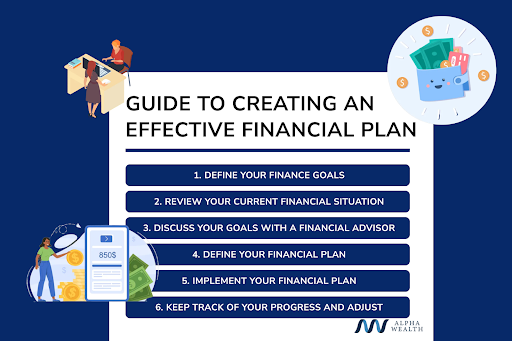
At Alpha Wealth, we understand that managing your personal finances can be a daunting task. However, creating a financial plan is a vital step in taking control of your finances. An effective financial plan allows you to identify areas for improvement to effectively manage your finances and ensure financial stability for your future. In this blog post, our financial advisor breaks down the six simple steps on how to create a financial plan that will set you up for financial freedom. 

Define Financial Goals 

Financial goals act as the base for any financial plan. To know what to plan for, you must determine your personal financial goals. You can start by identifying what exactly you want to accomplish with your money. 

This can be anything from:

  • Putting a down payment on a house
  • Starting a business,
  • Planning for your families futures.
  • Creating a budget for your children’s futures 

Your financial goals can also be a combination and should be to ensure you set yourself up for success in the future.  

Determine if your goals are short vs long-term as this will massively influence how you approach achieving them. It’s also important to know how much risk you’re willing to take if your goals involve things like mortgages or investments. Remember to be realistic; if you have a big long-term dream, break it down into smaller, attainable goals to get there. 

Review Your Current Financial Situation 

Once you have identified your goals, it’s time to look at where you are currently to see how you can reach those goals.

Start by gathering all your financial documents and accounts:

  • Bank accounts
  • Pensions
  • Investments

This is especially important if your goals relate to investing or retirement planning. Look at your current income and make a list of all potential income sources including side jobs or freelance work that consistently brings in money.  

Create a budget 

We would also recommend to all our clients to create a budget. Use all the information you’ve gathered to create a comprehensive plan of your spending. Budgets are great for determining where any bad spending habits might lie and identifying in which areas you can cut back. To get started in creating your budget, check out our free to use Budget Calculator on our website.

After you do this, you’re ready for the next (and most important) step.  

Discuss Your Goals with a Financial Advisor 

The importance of a financial advisor cannot be understated. Most people don’t go to financial advisors for help and instead seek out friends, family, or the internet. While these sources can be a great starting point, it’s important to remember that what worked for others might not work for you. 

Working with a Financial Advisor

A financial advisor is a trained professional who will help create a comprehensive plan that best fits you as well as navigate complex financial products and provide insights on how to optimise investments.  

Importantly, a financial advisor is also a neutral third party. They can offer advice that is unaffected by outside biases that may cloud the judgment of those closest to you. Financial Advisors help by checking in with you consistently and once you’ve built a partnership, check-in to make sure you’re staying on track. 

Define Your Financial Plan 

Your financial advisor can help you create a personalised financial plan. This plan will be based on the goals you set up in the beginning in combination with your current financial situation. It will focus on guiding you towards completing your goals in the most effective manner. 

A financial plan is a great way to help: 

  • Pay off your debt
  • Increase your savings
  • Lower your spending 
  • Increase retirement savings
  • Increase family savings
  • Create a general budget to manage spending

Again, the plan depends on your financial needs, so you can tailor it to what you need. Your plan is the strategy for achieving the goals you originally set, so it is a roadmap to lead you to those achievements. It can also help you plan for unexpected events so you can continue in case of any setbacks.   

Implement Your Plan 

The hardest part of creating an effective financial plan is implementing it. Be sure to track your spending throughout the process to ensure that you’re staying on track with your financials.

We can help you set up and create a financial plan that is easy to track and manage but if you are looking to create your own budget plan, our budgeting tool is a great source to get started budgeting on your own.

Another way to implement your plan is to automate transfers each month to different accounts so that when you get paid, your money will go right into the different accounts it needs to. It can be difficult to stay disciplined, but focusing on your goals and reasons behind your new system will help.  

Keep Track of Progress and Adjust (If Necessary)  

It’s important to celebrate the small wins; even one or two months closer to your goal is better than before and it’s important to recognise that. On the other hand, don’t get discouraged if you go over budget or any emergency expense means you can’t save as much as you wanted. 

Life happens, and you must react accordingly. If the plan isn’t working for you, don’t be afraid to speak to your financial advisor and make changes that will put you on a better path to fulfilling your goals.  

Financial Advice from Alpha Wealth  

Financial planning can be complex, but it doesn’t have to be overwhelming. Creating a plan is a crucial step in achieving financial security and stability.

Alpha Wealth is here to here to help you to take control over your financial future. Book an appointment today so that you can build a financial plan that will set you up for success.  

Nick Charalambous

Nick Charalambous

11th Apr 2023

Share this post

LinkedInTwitterFacebook

Related articles

8 Simple Expert Tips to Make 2025 Your Best Year Yet
Financial Planning

8 Simple Expert Tips to Make 2025 Your Best Year Yet

The start of a new year is the perfect opportunity to take control of your finances and build better money habits—but it can be hard to know where to start.

Financial success isn’t about being perfect—it’s about progress. Small, consistent efforts can create a strong foundation for long-term stability. Whether your goals are to save for a home, reduce debt, or feel more in control of your money, 2025 is your chance to start fresh. By reviewing your finances, setting realistic goals, and using tools like tax credits and savings plans, you’ll be well on your way to making 2025 your most financially secure year yet.

1. Review Your Finances Regularly

Think of your financial plan as a guide to staying in control of your money. Start by tracking all your income and expenses for one month—groceries, transport, bills, and even forgotten subscriptions. Once you know where your money is going, you’ll see opportunities to cut back, like eating out less or cancelling unused services.

To make this process easier, use Alpha Wealth’s handy Budget Calculator to get a clear picture of your financial situation.

2. Reduce Debt Strategically

Overspending during Christmas is common, especially on credit cards with high-interest rates. Prioritise paying off this debt as quickly as possible before you start saving. Reducing debt gives you more financial freedom and lowers the stress of repayment in 2025.

Pro Tip: Start by tackling the highest-interest debts first—these are costing you the most.

3. Segregate Your Savings

Divide your savings into three pots to keep your financial goals clear:

  • Short-term (less than 3 years): For immediate goals like buying a car or holiday expenses.
  • Medium-term (3-10 years): For goals like education or major life milestones.
  • Long-term (retirement): Invest in tax-efficient options like pensions to maximise growth.

By separating your funds, you can use the right financial tools for each timeline, ensuring your money works harder for you.

4. Maximise Your Savings Returns

Don’t let your money sit in low-interest accounts. For short-term savings, consider online banks like Raisin or Bunq, which often offer rates above 2%. Lock in fixed-term deposit rates now before they drop further in 2025.

Also, take a moment to review your mortgage rate. You might be able to switch to a lower rate and save significantly on your monthly repayments.

5. Boost Pension Contributions

It’s never too early or too late to focus on your pension. Small contributions now can grow significantly over time thanks to compound interest.

Take advantage of the tax relief on contributions—up to 40%. If your employer offers a matching scheme, join it to benefit from essentially free money. Boosting your pension now can make a big difference in your retirement years.

6. Practice the Rule of 72

Impulse purchases can derail your budget. Use the “Rule of 72”: wait 72 hours before making any non-essential purchase. This cooling-off period is particularly useful during January sales, helping you avoid unnecessary expenses while still enjoying genuine bargains.

7. Claim Your Tax Credits

The start of the year is the perfect time to review your tax credits and allowances. Many people are eligible to reclaim up to four years’ worth of missed credits, such as:

  • Remote Working Relief
  • Rent Tax Credit (€1,500 per individual)

Log in to Revenue’s myAccount or Revenue Online Service (ROS) to update your details and ensure you’re not leaving money on the table.

8. Plan Ahead for Big Expenses

Instead of scrambling for cash when big expenses arise, start saving early. Open a dedicated savings account in January for your 2025 goals, whether it’s a holiday, Christmas, or a major purchase.

For example, saving €167 per month will leave you with €2,000 by summer.

Let Us Help You

Ready to take the first step? Talk to us to learn more about how we can help you achieve your financial goals for 2025 and beyond!

READ MORE 15th Jan 2025
What Budget 2025 means for you
Financial Planning

What Budget 2025 means for you

As the dust settles on Budget 2025, many are wondering how the announced measures will impact their daily lives. With a headline figure of €6.9 billion in new spending, the coalition government is taking steps to address a range of societal needs. Here’s a breakdown of the key takeaways from the budget and how they might affect you.

1. Social Welfare Increases

Those receiving social protection will benefit from a €12 weekly increase in payments. Additionally, double payments in both October and December will provide extra help just when it’s needed most. Families with newborns can look forward to a special €420 ‘baby boost’ payment, while maternity, paternity, and parental benefits will rise by €15 a week. These changes offer real financial support for households facing the rising cost of living.

2. Tax Cuts and Reliefs

Taxpayers will feel some relief with the changes introduced in Budget 2025. The entry point for the higher 40% tax rate is moving up to €44,000, so more of your income will be taxed at the lower 20% rate. This will leave middle-income earners with an extra €100 per month. Combined with a 1% cut in the USC, these changes are designed to ease financial pressures and boost your take-home pay.

3. Housing and Renters

First-time buyers will be pleased to know that the Help-to-Buy scheme has been extended until 2029. This allows you to continue receiving up to €30,000 to help with buying your first home. For current homeowners, mortgage interest relief has been extended for another year, a lifeline for those feeling the pressure from rising interest rates. If you’re renting, there’s some welcome news. The renter’s tax credit will increase to €1,000 next year, offering significant relief for tenants battling high rents. Even better, you can backdate this for 2024, so if you’re a jointly-assessed couple, you could claim up to €2,000. That’s a big boost for your bank balance.

4. Students

Good news for third-level students and their families: college fees are being reduced by €1,000, bringing the annual cost down to €2,000. This will provide much-needed financial relief for those navigating the costs of higher education. Postgraduate students will also benefit, with the fee contribution grant increasing from €4,000 to €5,000. This change is a positive step toward making education more accessible and affordable.

5. Health and Wellbeing

Healthcare spending is a significant component of Budget 2025, with additional funds allocated to the Health Service Executive (HSE) to tackle waiting lists and expand services. There will also be further investment in mental health services, an area that has seen growing demand post-pandemic.

6. Vapers and Smokers

If you smoke or vape, you’ll see price hikes on these products. Cigarettes will increase by €1 per pack, bringing the most popular brand to €18.05. Vapers will also feel the pinch, with the price of a typical vape rising to €9.23 next year. These changes aim to promote health, but they will hit younger consumers’ pockets the hardest.

Conclusion

Budget 2025 introduces a range of financial supports designed to relieve the pressure on households as they navigate the cost of living challenges. While Budget 2025 brings positive changes that will help ease financial pressures, it’s important to take control of your finances and make the most of these opportunities. Consider speaking with an impartial financial advisor to get your money working harder.

READ MORE 2nd Oct 2024
6 Expert Tips for Parents to Secure Their Child’s Financial Future
Financial Planning

6 Expert Tips for Parents to Secure Their Child’s Financial Future

In light of back-to-school financial stress, here are six ways to help you better manage family finances and give your child the best financial start possible.

As a parent, securing your child’s future is always a top priority. However, with back-to-school season approaching and its associated costs, family finances are more pressing than ever. A new report* reveals that over one in four parents take on debt to cover these expenses. So, how can you manage family finances to give your child a strong start in life?

While saving the monthly €140 children’s allowance in a bank account is common practice, here Nick explores six more strategic options to help you better manage family finances and give your child the best financial start possible.

6 Tips to Manage Family Finances

1. Explore Alternative Savings Options

Instead of traditional low-interest bank accounts, consider savings plans from insurance companies with higher potential returns through diversified investments. With current inflation at 2.5%, seeking better returns is crucial to ensure better returns on your money.

2. Harness the Power of Compound Interest

Starting a savings plan early allows your money to grow exponentially. Compound interest is earned on both the initial amount and the accumulated interest. For example, saving €140 a month from birth can grow significantly over 18 years, with a 4% annual growth yielding €44,807.67 compared to €36,692.14 at a 2% growth rate.

3. Secure Funds for Education Early

Early savings prepare you for future financial demands and relieve the burden of education costs. A dedicated savings plan supports your child’s ambitions and causes you less financial stress by avoiding high-interest loans.

4. Utilise Tax-Free Contributions

Take advantage of the Small Gift Exemption, allowing parents and grandparents to gift up to €3,000 annually tax-free. This is a popular way to fund future college fees or house deposits.

5. Plan for Medium to Long-Term Goals

Savings plans are ideal for goals over five years, benefiting from compound interest. Understand plan terms to ensure 100% allocation of your money and avoid fees. Flexibility allows fund access without penalties, but remember it’s a medium—to long-term investment.

6. Consult a Financial Advisor for Tailored Investments

Speak to an impartial financial advisor about equity-based investments suited to your risk appetite. Investment options on a risk scale from one to five allow you to adjust over the years for growth within your risk profile. 

Book a financial review with Alpha Wealth for trusted financial advice on tax savings, pensions, investments, and more.

Learn more in our upcoming webinar

Our informative webinar, “How to Best Prepare for Your Children’s Education Costs,” hosted by David Looney, Senior Financial Advisor will provide practical strategies to help you manage and save effectively for future educational expenses. Learn how to ease the financial burden and ensure a secure educational path for your children. Register below:

READ MORE 4th Sept 2024